
Chu Wan was finally relieved to have made such a fortune.
Without money, nothing felt worthwhile, and you could only live a life of poverty, wearing tattered clothes.
Now that she had money, she could be more generous with her money.
She first went to the black market and exchanged the foreign exchange certificates for RMB. In fact, foreign exchange certificates were still popular these days, as they could be used to buy things that RMB couldn’t. For example, officially recognized antique shops required foreign exchange certificates to sell to foreigners.
On the black market, foreign exchange certificates were usually exchanged at a rate of 1:1.1 or 1:1.2 RMB. Because she was in a hurry to get rid of them, she exchanged 150 RMB in foreign exchange certificates for only 170 RMB, which she felt was enough to make a profit.
In this way, she earned 220 yuan from the Buddha carving, which was quite a big deal. Combined with what she earned from the jade carving before, she had about 290 yuan in hand, which was not a small amount either.
One should know that these days, many people only earned thirty or forty yuan a month, so this was already equivalent to more than half a year’s salary for urban workers.
Chu Wan had so much money in her pocket and wanted to buy some fabric to make clothes, but when she got to the store, she found that it was packed with people, three layers deep. People were frantically buying things, with elderly men and women squeezing in, young wives desperately trying to pay, and young men shouting, “I’ll buy it all!”
Chu Wan asked around and learned that after the reform and opening up, cloth coupons and the like began to lose their validity, but the market supply was still short, and ordinary people often ran out of goods.
Furthermore, with the elimination of ration coupons, people were afraid that prices would be deregulated and become too expensive, making it impossible to buy fabric in the future. As a result, everyone took out their savings and frantically bought and hoarded fabric. Some people even prepared fabric and bedding for their sons’ and grandsons’ weddings.
This may sound funny at first, since, in the future, as long as you have money, you wouldn’t have to worry about buying these things. But they were all ordinary people and couldn’t have that kind of foresight. Faced with great historical changes, people had too much uncertainty in their hearts and panic spread easily, so they frantically bought and hoarded what they could.
Chu Wan naturally couldn’t snag anything, so it seemed that even with money, she couldn’t buy any cloth. She had no choice but to give up; she thought that when she went back to the countryside she would have to see if anyone had any handwoven cloth to sell.
She then went and bought face cream, two bottles of wine, a carton of cigarettes, and some meat and vegetables, all of which she carried to Hu Huiyun’s house.
When Hu Huiyun’s mother saw this, she was startled. “Wanwan, what are you doing? Why did you suddenly buy so much!”
Chu Wan said, “I just suddenly bought these today, Auntie, don’t ask how I got it, it’s all legitimate anyway!”
Hu Huiyun’s mother refused, but Chu Wan insisted, so Hu Huiyun’s mother reluctantly accepted it. However, she still nagged Chu Wan for a long time, saying that she was being too polite.
Chu Wan smiled but didn’t say anything.
She liked staying at Hu Huiyun’s house, but she felt embarrassed to stay at someone else’s house being a bother, so she felt more comfortable after giving these things to them.
In the evening, Hu Huiyun’s mother stewed fish, and the fish soup was really delicious. Chu Wan drank a big bowl of it with sesame-filled flatbread, until her nose was sweating. After dinner, she ate some sweet potatoes around the stove, chatted for a while, and then went to sleep.
Before going to sleep, she thought about how she had more than two hundred yuan on hand, but she couldn’t keep it all. Her hands were itching to go out and look around again tomorrow. She would buy some things, and after that, go to the Lu family’s house.
The next day, Chu Wan went to the Yuyuantan morning market early in the morning. Unfortunately, the Cultural Relics Bureau arrived early and arrested a group of people selling antiques. Everyone avoided the area, while some people just stood there watching the spectacle.
When Chu Wan saw the Cultural Relics Bureau, she quickly hid. She had also shown up yesterday, and she didn’t want them to see her again and remember.
She was also reluctant to go to Panjiayuan, worried that some sellers might recognize her. If they do recognize her, it’ll be harder to negotiate a lower price; they might just stop bargaining altogether, trying to take advantage of her.
She was thinking of finding another place, and after some deliberation, she went to Baiqiao Market.
There were only a few antique markets in Beijing. Panjiayuan has been around for many years, and Yuyuantan Morning Market only has a dozen or so stalls that close at eight o’clock in the morning. Chu Wan wanted to try something new, so she went to Baiqiao Market. She didn’t have high hopes because in her memory, Baiqiao Market at this time probably wasn’t that big yet. But when she got there, she was pleasantly surprised to find that there were dozens of stalls.
The Baiqiao Market was slightly larger than the Yuyuantan Morning Market. The vendors were clearly farmers from the suburbs, who simply laid out bags of urea on the ground and sold their wares.
Chu Wan remained calm as she overheard others haggling over prices. She could roughly deduce that they were mostly farmers from the outskirts of Beijing, primarily from Hebei Province, Xiongxian County, Wen’an County, and Dacheng City. The items they sold were incredibly diverse, ranging from large famille rose vases and inkstones to jade and bronze wares.
Things here were cheap, so cheap they’re unbelievable.
It seemed that those farmers were secretly taking out things they had hidden in their own homes to sell, having managed to avoid the ‘Destroy the Four Olds’ campaign. They didn’t dare to make a fuss, hoping to take advantage of the improved times to quickly exchange them for some money. Of course, some also learned that this could be sold for money, and after reaping the benefits, they also bought things from relatives, friends, and people in surrounding villages.
Chu Wan looked around and found quite a few good items. A large famille rose vase from the late Qing Dynasty was no more than 15 yuan, and those from the Ming Dynasty were barely a few dozen yuan. Many of the other bargain hunters around her had already made their purchases, but Chu Wan hasn’t bought anything yet.
Having learned her lesson from that stone carving, she dared not cause herself any more trouble. No matter how good that Kangxi blue and white landscape general jar was, it was not easy to carry around. If she couldn’t sell it in a short time, it would be stuck in her hands. She would have to take it back to Yongling Village, and who knew who in whose hands it might end up. She couldn’t possibly keep it herself.
Therefore, if she wanted to collect, she should collect small items, such as jade, so that she could gain a lot by spending a little.
As she was strolling around, she saw a seller taking things out of a urea bag. The urea bag was filthy, and the seller’s hands were covered in fertilizer dust.
He was pulling out two ceramic monkeys, and several large silver coins were jingling and falling about, making a clinking sound inside the urea bag.
Chu Wan listened to the sound and felt that it had a slightly crisp quality; she recognized the sound.
Pearls and Jade Beside Me in the ’80s translated by Maela @ whitemoonlighttranslations.com
T/N: What’s this? An update?? 👀
Chu Wan recognized the sound because real jade makes a beautiful, distinct ping.
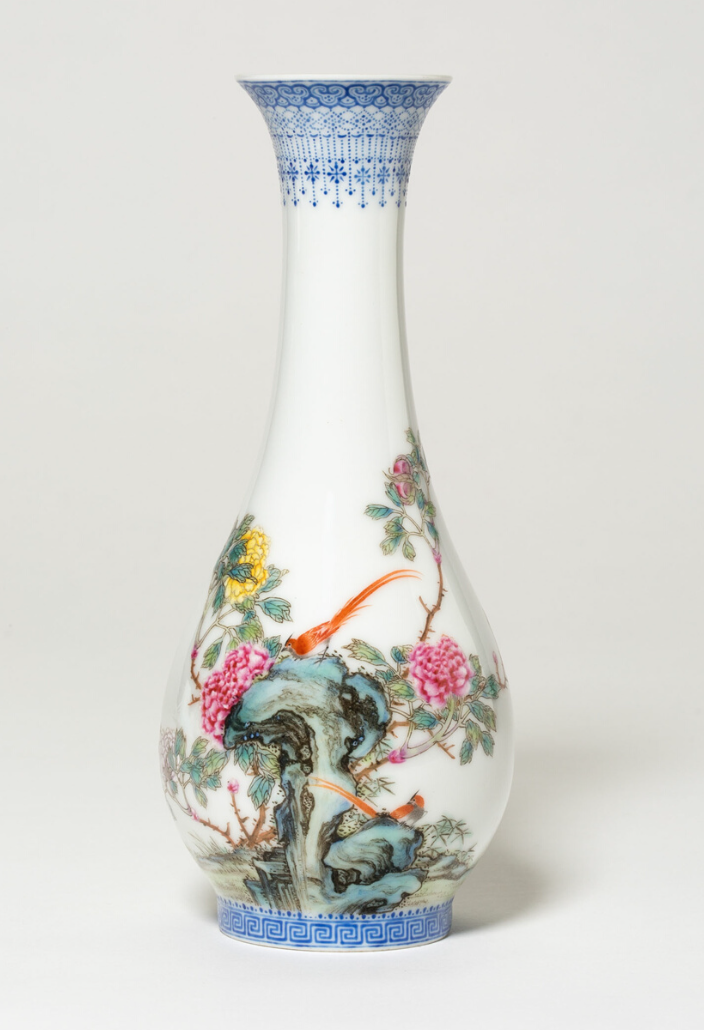
Famille Rose porcelain. A traditional style of Chinese ceramics defined by a dominant opaque pink or rose-colored overglaze enamel.
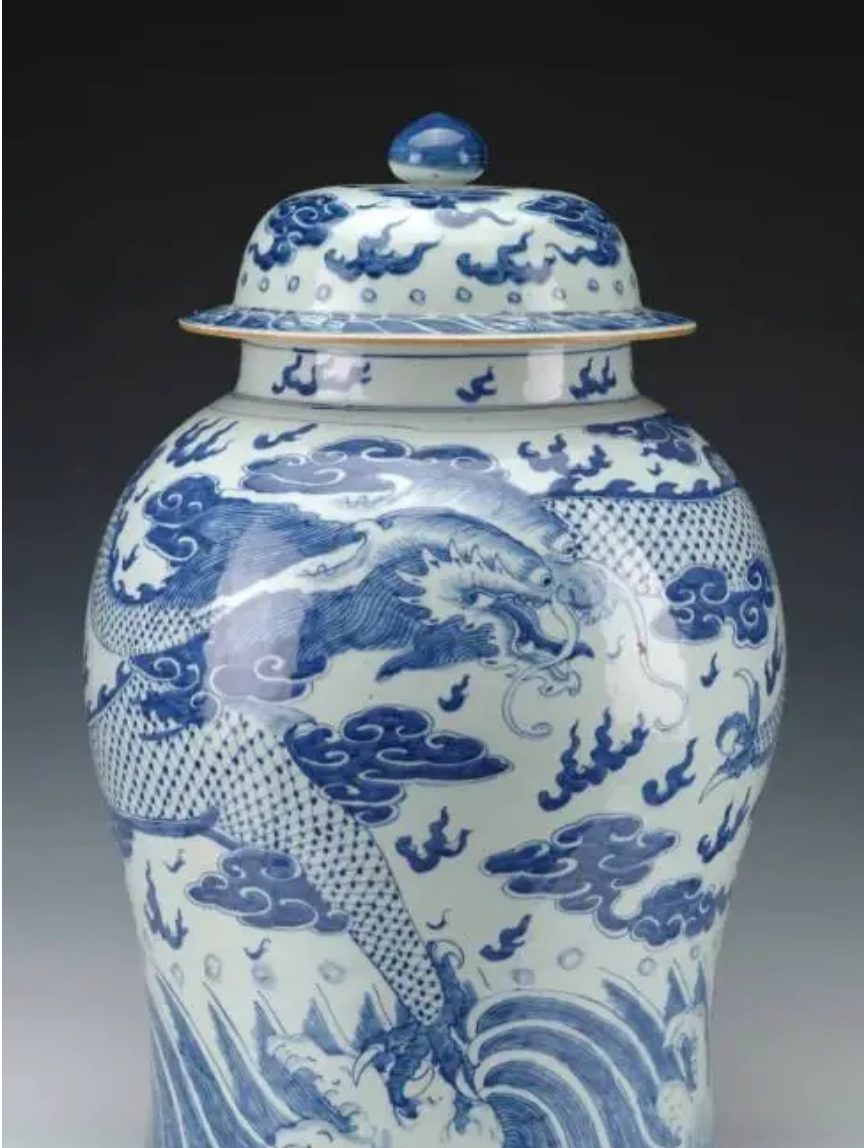
Kangxi blue and white general jar. The name comes from the lid which looks like the hat of a general in ancient times.

 WHITE MOONLIGHT TRANSLATIONS
Leave a comment